

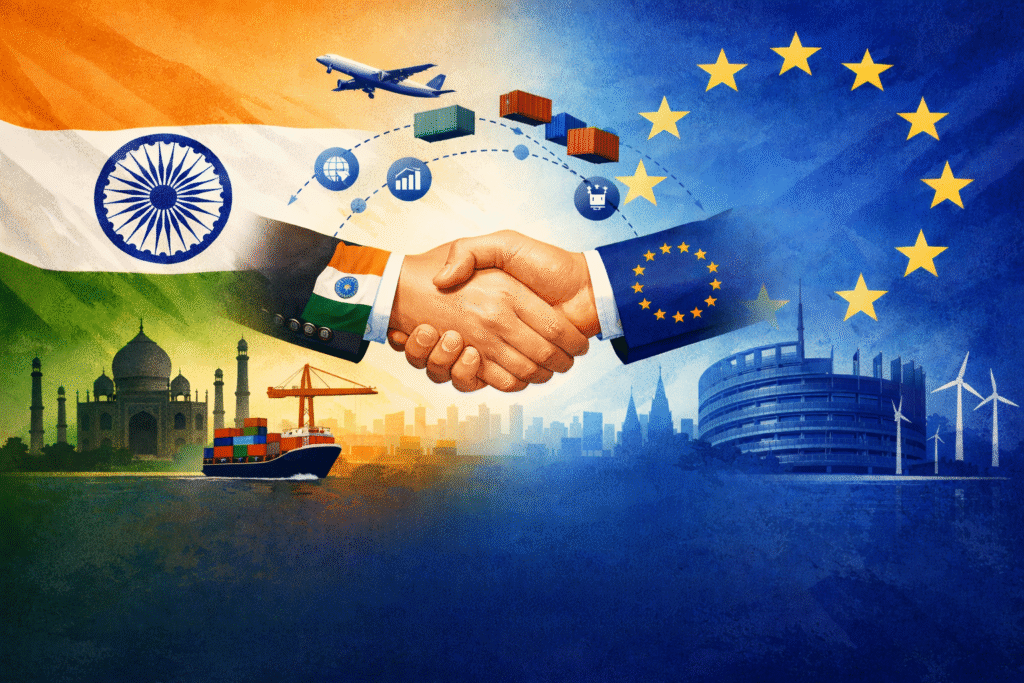
The India–EU Free Trade Agreement is a landmark trade initiative that aims to strengthen economic ties between India and the European Union. As global trade dynamics shift, this agreement is expected to unlock new opportunities in exports, services, investment, and sustainable development.
With negotiations revived and progressing steadily, the India–EU FTA has become a key topic for businesses, exporters, investors, and policymakers.
What Is the India–EU Free Trade Agreement?
The India–EU Free Trade Agreement is designed to reduce trade barriers, eliminate tariffs, and promote smoother movement of goods, services, capital, and professionals between India and EU member states.
Originally launched in 2007, negotiations were paused and later resumed in 2022, reflecting renewed strategic and economic priorities on both sides.
Why the India–EU Free Trade Agreement Is Important
1. Strengthening India–EU Trade Relations
The EU is among India’s largest trading partners. The agreement is expected to significantly increase bilateral trade volume by improving market access and lowering costs.
2. Boost to Indian Exports
Key export-oriented sectors such as:
- Textiles and apparel
- Pharmaceuticals
- Engineering goods
- Auto components
will gain improved access to European markets.
3. Growth in Foreign Direct Investment (FDI)
The agreement encourages EU companies to invest in Indian manufacturing, infrastructure, renewable energy, and technology sectors.
Key Sectors Covered Under the India–EU FTA
Trade in Goods
- Reduction or elimination of customs duties
- Faster customs clearance
- Improved supply chain efficiency
Trade in Services
India’s strengths in:
- IT and software services
- Financial services
- Consulting and professional services
are expected to benefit greatly from easier EU market access.
Investment Protection
Clear investment rules will provide:
- Better investor confidence
- Reduced regulatory uncertainty
- Long-term business stability
Intellectual Property Rights (IPR)
Balanced protection of:
- Patents
- Trademarks
- Geographical Indications (GIs)
while ensuring access to affordable medicines.
Sustainability and ESG Standards
The India–EU FTA integrates:
- Environmental protection
- Labor rights
- Climate action commitments
making it a future-ready trade agreement.
Benefits of the India–EU Free Trade Agreement
✅ Benefits for India
- Increased exports and foreign exchange earnings
- Job creation across manufacturing and services
- Technology transfer and innovation
- Strong support for Make in India
✅ Benefits for the European Union
- Access to India’s fast-growing consumer market
- Cost-effective manufacturing opportunities
- Stronger presence in Asia’s supply chains
Challenges in India–EU FTA Negotiations
Despite its advantages, challenges include:
- Tariff concerns in sensitive sectors
- Data protection and digital trade norms
- Environmental compliance costs
- Regulatory alignment issues
Resolving these will be crucial for successful implementation.
Current Status of India–EU Free Trade Agreement
Negotiations are ongoing, with multiple chapters under discussion. Both sides have shown strong political commitment, and experts expect a phased or interim agreement as talks progress.
Impact on Businesses and Exporters
For Indian Businesses
- Easier entry into EU markets
- Improved global competitiveness
- Higher compliance and quality standards
For European Businesses
- Manufacturing partnerships in India
- Infrastructure and green energy investments
- Long-term market expansion
Future Outlook of the India–EU Free Trade Agreement
Once finalized, the India–EU FTA could:
- Redefine India’s global trade position
- Strengthen EU–Asia economic ties
- Set a benchmark for sustainable trade agreements
Conclusion
The India–EU Free Trade Agreement is more than a trade deal—it is a strategic partnership aimed at long-term economic growth, sustainability, and global competitiveness. While negotiations remain complex, the benefits far outweigh the challenges.
For businesses, exporters, investors, and policymakers, staying informed about the India–EU FTA is essential as it shapes the future of international trade.
