
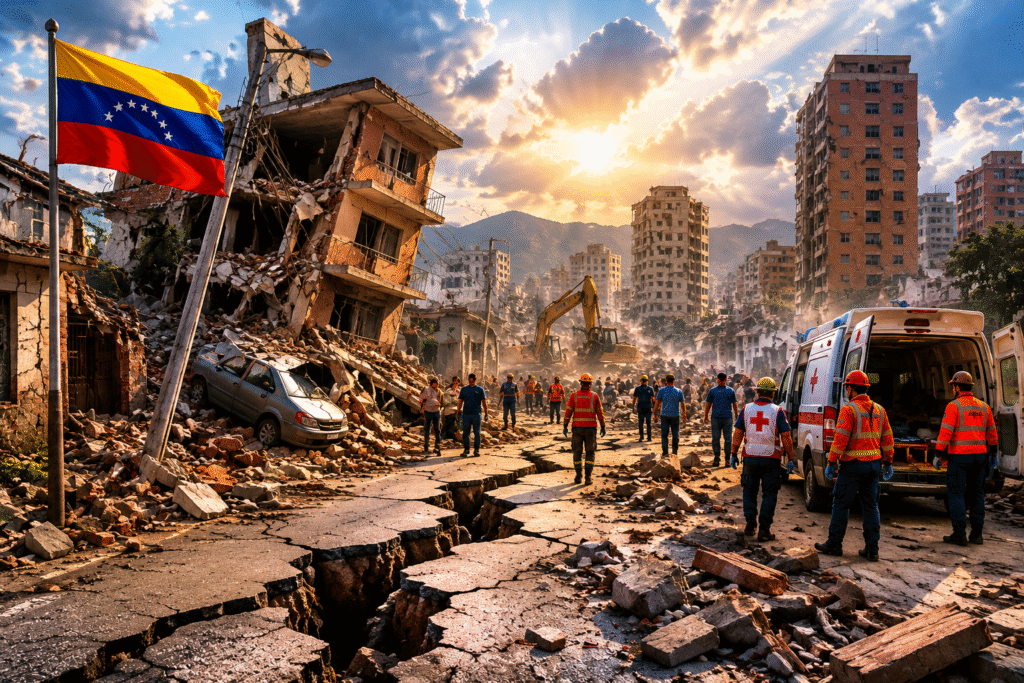

Earthquakes are among the most destructive natural disasters on Earth, and when they strike populated regions, the impact can be immediate and severe. Venezuela, located in a seismically active zone in northern South America, has experienced powerful earthquakes in the past, and such events often lead to significant damage, disruption, and emergency response efforts.
This blog explores how powerful earthquakes affect regions like Venezuela, the kind of damage they cause, and how authorities and communities respond during such critical situations.
Understanding Earthquakes in Venezuela
Venezuela lies near the boundary of major tectonic plates, making it vulnerable to seismic activity. Movements beneath the Earth’s surface can suddenly release energy, creating earthquakes that vary from mild tremors to highly destructive shocks.
When a strong earthquake occurs, the energy spreads in waves, shaking the ground, buildings, and infrastructure. The severity depends on:
- Depth of the earthquake
- Distance from the epicenter
- Quality of construction
- Population density of the affected area
Impact of Powerful Earthquakes
When a strong earthquake hits a country like Venezuela, the effects can be widespread and long-lasting.
1. Structural Damage
Buildings, homes, bridges, and roads may suffer cracks or collapse. Older structures or those not built to seismic standards are especially vulnerable.
2. Human Impact
Earthquakes can result in injuries, displacement, and loss of life. Panic and confusion during the event often increase risks.
3. Infrastructure Disruption
Electricity, water supply, transportation systems, and communication networks can be interrupted, making rescue operations more difficult.
4. Economic Losses
Repairing damaged infrastructure and supporting affected communities can place a heavy financial burden on governments and individuals.
Emergency Response After Earthquakes
A quick and coordinated response is essential after a major earthquake. In Venezuela, as in many countries, emergency teams typically focus on:
Search and Rescue Operations
Teams work to locate and rescue people trapped under debris using specialized equipment and trained personnel.
Medical Assistance
Hospitals and temporary medical camps treat injured individuals, often dealing with trauma-related injuries.
Relief Distribution
Food, water, blankets, and emergency supplies are distributed to affected populations, especially those who have lost their homes.
Temporary Shelters
Displaced families are moved to safe shelters such as schools, community centers, or tents.
Role of Disaster Preparedness
Preparedness plays a crucial role in reducing earthquake damage. Governments and communities can minimize risks by:
- Enforcing earthquake-resistant building codes
- Conducting regular disaster drills
- Educating people about safety procedures
- Developing early warning systems
- Maintaining emergency response teams
Public awareness also helps individuals respond calmly and correctly during earthquakes.
Safety Measures During an Earthquake
If an earthquake strikes, the following actions can help protect lives:
- Drop to the ground immediately
- Take cover under sturdy furniture
- Hold on until shaking stops
- Stay away from windows and heavy objects
- If outdoors, move to an open area away from buildings
After the shaking stops, it is important to check for injuries and follow official instructions.
Conclusion
Powerful earthquakes in regions like Venezuela highlight the importance of preparedness, strong infrastructure, and effective emergency response systems. While earthquakes cannot be prevented, their impact can be reduced through awareness, planning, and timely action.
Communities that invest in safety measures and disaster readiness are better equipped to recover and rebuild after such natural events.